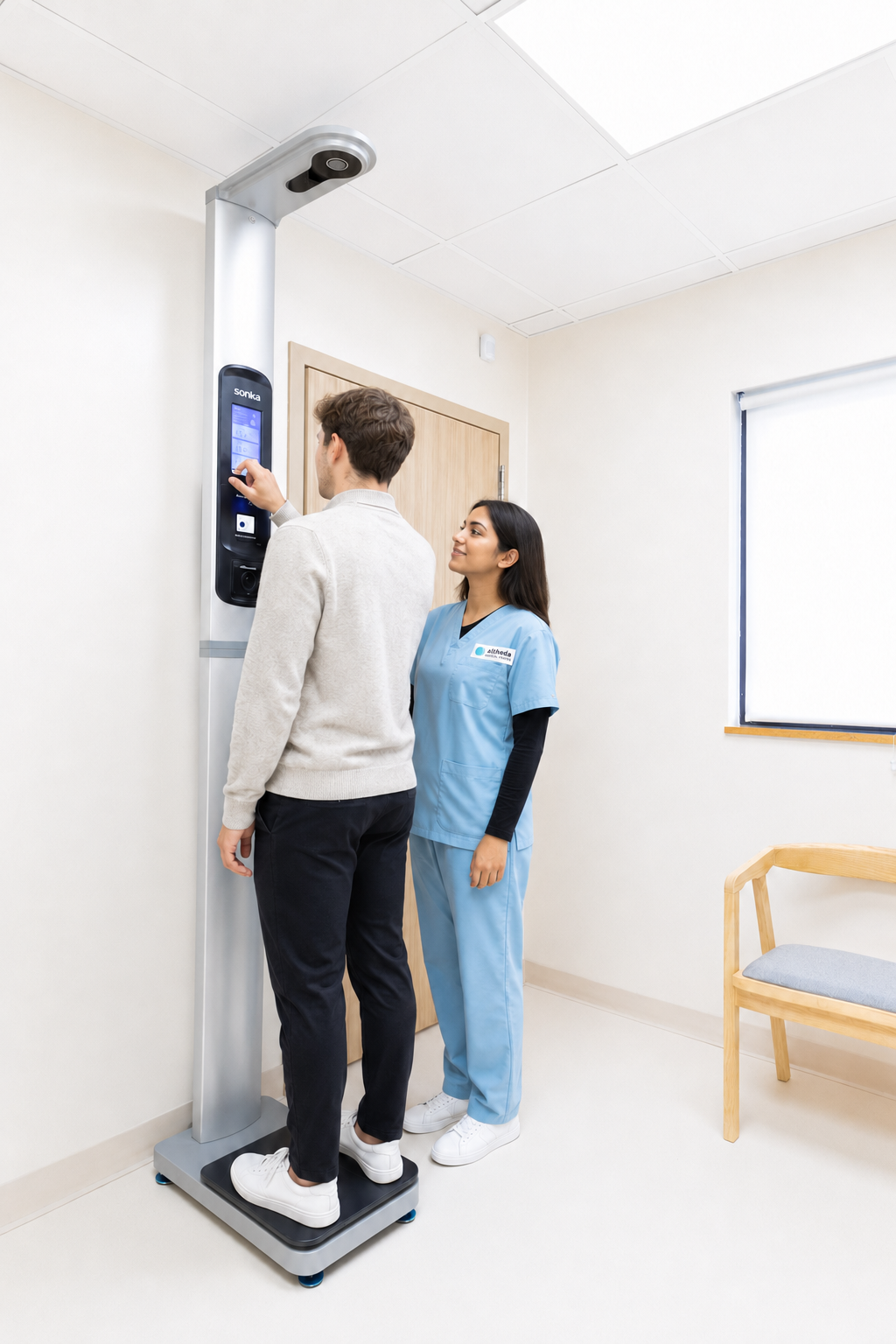











Men’s Urinary Symptoms & UTI Visit in Pittsburgh
Urinary symptoms in men can have several causes. Altheda can help review burning, urgency, frequent urination, weak stream, discharge, pelvic discomfort, STI concerns, and whether testing or in-person care is recommended.
Get seen right away!
Most insurance accepted
New patients welcome
Can Men Get UTI Symptoms Checked at Altheda?
Yes. Altheda can evaluate urinary symptoms in men, including burning with urination, frequent urination, urgency, weak stream, pelvic or groin discomfort, and concerns about UTI or STI exposure. Depending on your symptoms, your provider may recommend urine testing, STI testing, in-person evaluation, prescription treatment when clinically appropriate, or follow-up.
Yes. Altheda can evaluate burning with urination, frequency, urgency, weak stream, pelvic discomfort, and UTI or STI exposure concerns.
Men’s urinary symptoms often need careful review before choosing the next step.
Symptoms may need testing or in-person review.
Men’s Urinary Symptom Review
Urinary symptoms in men should be reviewed carefully
In men, urinary symptoms are not always a simple bladder infection. Burning, urgency, frequency, pelvic discomfort, weak stream, penile discharge, testicular discomfort, or blood in the urine may point to different causes. A provider visit can help determine whether symptoms suggest a UTI, STI-related urethritis, prostate-related concern, kidney infection warning signs, or another issue.
Men’s urinary symptoms can have different causes. A visit can help decide whether testing, treatment, or in-person care is needed.
Remote or In-Person Visit
Can this visit be done remotely?
Some urinary symptom concerns may start remotely when clinically appropriate. However, urinary symptoms in men often need careful review, and testing or in-person care may be recommended depending on symptoms, age, medical history, STI risk, prostate symptoms, recurrence, or warning signs.
Some concerns can start remotely, but men’s urinary symptoms often need testing or in-person evaluation.
Remote visit may be appropriate for
- Medication questions
- Follow-up for improving symptoms
- Mild urinary discomfort without warning signs
- Discussion of prior test results
- Provider triage before testing
- Questions about whether STI testing is needed
- Symptoms that are stable and not severe
In-person visit may be better for
- First-time or recurrent urinary symptoms
- Blood in the urine or penile discharge
- Testicular pain or swelling
- Fever, chills, back pain, nausea, or vomiting
- Weak stream or trouble starting urination
- Pelvic, groin, or prostate-area discomfort
- Possible STI exposure or symptoms that do not improve
- Significant medical conditions or weakened immune system
A remote visit may help start the process, but men’s urinary symptoms often require urine testing, STI testing, physical exam, or in-person evaluation.
Before Your Visit
What to know before a men’s urinary symptom visit
Your provider may review symptoms, risk factors, possible testing, and the safest next step without assuming every urinary concern is a simple UTI.
Symptoms reviewed
Burning, urgency, frequency, weak stream, discharge, blood in urine, pelvic discomfort, or testicular symptoms may be discussed.
Why men’s symptoms differ
Symptoms may involve UTI, STI-related irritation, prostate concerns, kidney warning signs, or other urinary tract issues.
Testing options
Urine testing, urine culture, STI testing, physical exam, prostate symptom review, or referral may be recommended.
Next steps
You leave with guidance about testing, treatment when appropriate, follow-up, STI precautions, or urgent care needs.
When to Schedule
Schedule a visit if urinary symptoms are new, painful, recurring, or concerning
You do not need to know whether it is a UTI before booking. A provider can help review symptoms and decide whether testing, treatment, or in-person care is appropriate.
Show more symptoms this visit can review
UTI, STI, or Prostate Concern?
Could urinary symptoms be a UTI, STI, or prostate concern?
Urinary symptoms can feel similar even when the cause is different. A provider can help decide which testing or follow-up makes sense.
Possible UTI symptoms
- Burning with urination
- Frequent urination
- Urgency
- Lower abdominal discomfort
- Cloudy or strong-smelling urine
- Blood in urine
Possible STI or urethritis symptoms
- Burning with urination
- Penile discharge
- Itching or irritation at the opening of the penis
- Testicular pain or swelling
- Symptoms after a new partner
- Rectal discomfort or discharge, depending on exposure
Possible prostate-related symptoms
- Weak stream
- Trouble starting urination
- Dribbling
- Feeling unable to empty the bladder
- Frequent nighttime urination
- Pelvic, groin, or lower back discomfort
- Pain after ejaculation
Burning, urgency, frequency, weak stream, discharge, or pelvic discomfort should be reviewed in context so your provider can recommend appropriate testing and follow-up.
What to Expect During Your Visit
-
1
Symptom Review
-
2
Medical, Sexual Health, and Risk Review
-
3
Testing or Care Plan
Testing & Treatment Options
Testing and Treatment Options May Include
Depending on your evaluation, your provider may discuss testing, medication when clinically appropriate, symptom relief, prostate symptom review, follow-up for recurrent symptoms, or referral guidance if urology care may be needed.
Your provider may discuss testing, medication when appropriate, symptom relief, follow-up, or referral guidance.
Urine testing may be recommended, and urine culture may be discussed when appropriate.
Testing may be reviewed if symptoms or exposure history suggest STI-related urethritis.
Medication, including antibiotics, may be recommended when clinically appropriate.
Supportive care, hydration, and self-care guidance may be discussed based on symptoms.
Weak stream, dribbling, pelvic discomfort, or trouble starting urination may be reviewed.
Recurrent symptoms, warning signs, or urology referral needs may be discussed.
Some urinary symptoms may start with a remote visit, but urine testing or in-person evaluation may be recommended. Antibiotics may be recommended when symptoms, testing, and clinical evaluation suggest they are appropriate.
Review urine testing, STI testing, medication options, prostate symptoms, follow-up needs, and warning signs.
Prompt In-Person Care
When Men’s Urinary Symptoms Need Prompt In-Person Care
Some urinary symptoms should be evaluated promptly in person, through urgent care, or through emergency care, especially when symptoms are severe, rapidly worsening, recurrent, or linked with fever, pain, swelling, or trouble urinating.
Do not wait for a routine visit if you have fever, kidney-area pain, blood in the urine, severe pelvic or testicular pain, inability to urinate, confusion, severe weakness, or feel very ill.
Show warning signs that may need prompt in-person, urgent, or emergency care
Why Choose Altheda for Men’s Urinary Symptoms and UTI Visit?
- Private, Respectful Care Talk about urinary symptoms in a private and comfortable setting.
- Testing Guidance We help determine if urine testing, STI testing, or an in-person visit is needed.
- Primary Care Perspective We look at possible causes, including prostate, sexual health, and other medical concerns.
- Virtual or In-Person Options Start with a virtual visit when appropriate, with in-person care available if needed.
- Clear Next Steps Leave with a clear plan for testing, treatment, follow-up, or referral.

We Also Provide
What do patients say about Altheda?
Men’s Urinary Symptoms & UTI Visit FAQs
Helpful answers about burning with urination, frequent urination, urgency, weak stream, pelvic discomfort, STI concerns, urine testing, treatment options, and when symptoms need prompt attention.
Visit Basics
6 questions - men’s urinary symptoms, visit scope, and what to expect.
Can men get UTI symptoms checked at Altheda?
Yes. Altheda can evaluate urinary symptoms in men, including burning with urination, frequent urination, urgency, weak stream, pelvic or groin discomfort, bladder pressure, cloudy urine, blood in the urine, penile discharge, testicular discomfort, or STI exposure concerns.
What is a men’s urinary symptoms and UTI visit?
This visit is for men who have urinary symptoms or concerns about UTI, STI exposure, prostate-related symptoms, kidney stone symptoms, bladder irritation, or other urinary tract issues. The provider reviews symptoms and decides what testing, treatment, follow-up, or referral may be appropriate.
Are urinary symptoms in men always a simple UTI?
No. In men, burning, urgency, frequency, weak stream, pelvic discomfort, discharge, testicular pain, or blood in the urine can have several possible causes. A provider may consider UTI, STI, prostatitis, enlarged prostate, kidney stones, bladder irritation, medication effects, or other conditions.
What symptoms can be reviewed during this visit?
Your provider can review burning with urination, frequent urination, urgency, difficulty starting urine, weak stream, dribbling, pelvic pressure, groin pain, lower abdominal discomfort, back or flank pain, fever, penile discharge, testicular discomfort, blood in the urine, or sexual exposure concerns.
Can one visit cover every urinary and sexual health concern?
One appointment may not cover every requested concern. What can be addressed depends on your symptoms, health history, clinical priorities, testing needs, safety concerns, exam needs, and available appointment time. Additional testing, follow-up, or another visit may be recommended.
What happens during a men’s urinary symptom visit?
Your provider may ask when symptoms started, how often they happen, whether symptoms are worsening, whether you have fever, back pain, discharge, testicular symptoms, blood in the urine, sexual exposure concerns, prostate symptoms, medication use, and prior UTI or STI history.
Symptoms & When to Schedule
6 questions - burning, urgency, weak stream, pelvic pain, discharge, and blood in urine.
When should a man schedule a visit for urinary symptoms?
Consider scheduling if you have burning with urination, frequent urination, urgency, cloudy or strong-smelling urine, blood in the urine, pelvic discomfort, weak stream, new discharge, testicular symptoms, STI exposure concerns, or symptoms that are worsening or not improving.
What does burning with urination mean in men?
Burning with urination can be related to UTI, urethral irritation, STI, prostatitis, kidney stone, dehydration, chemical irritation, or other causes. Testing and symptom review can help narrow down the next step.
What causes frequent urination or urgency in men?
Frequent urination or urgency can occur with UTI, bladder irritation, diabetes, caffeine or alcohol intake, medications, prostate enlargement, prostatitis, anxiety, overactive bladder, or other conditions. A provider can review timing, fluid intake, associated symptoms, and testing needs.
What does a weak stream or trouble starting urine mean?
A weak stream, hesitancy, dribbling, or feeling that the bladder does not empty can be related to prostate enlargement, prostate inflammation, medication effects, urinary retention, infection, or other urinary tract concerns. These symptoms should be reviewed carefully.
Should penile discharge be checked?
Yes. Penile discharge can be a sign of urethritis or an STI such as chlamydia or gonorrhea, but other causes are possible. Testing may be recommended, and sexual partners may need evaluation depending on results and provider guidance.
Should blood in the urine be checked?
Yes. Blood in the urine should be evaluated. It can happen with UTI, kidney stones, prostate issues, injury, medications, or other urinary tract problems. Your provider may recommend urine testing, additional labs, imaging, follow-up, or referral depending on the situation.
Urine Testing, STI Testing & Evaluation
6 questions - urine testing, culture, STI testing, labs, and outside results.
Can Altheda do urine testing for men?
Yes. Depending on your symptoms, your provider may recommend urine testing to look for signs of infection, blood, inflammation, or other abnormalities. A urine culture may also be considered when clinically appropriate.
What is a urine culture?
A urine culture is a lab test that can help identify bacteria that may be causing a urinary tract infection and can sometimes guide antibiotic selection. It may be recommended when symptoms, risk factors, or prior treatment history make it useful.
Can Altheda test for STIs if I have urinary symptoms?
Yes. If your symptoms or sexual history suggest possible exposure, your provider may recommend STI testing. Testing may include urine testing, swabs, or blood tests depending on symptoms, exposure sites, and what infections need to be checked.
Can a UTI and STI feel similar in men?
Yes. UTI and STI symptoms can overlap, especially burning with urination, urgency, discomfort, or urethral irritation. Penile discharge, testicular discomfort, recent new partner, or known exposure may make STI testing especially important.
Do I need blood work for urinary symptoms?
Not always. Blood work may be considered if there are signs of a more serious infection, kidney involvement, diabetes concerns, recurrent symptoms, medication safety concerns, or other medical issues that need review.
Can I bring outside urine, STI, or lab results?
Yes. You can bring or upload outside urine tests, urine culture results, STI results, medication lists, urology notes, imaging reports, or prior antibiotic history. Your provider can review them and decide whether repeat testing or follow-up is needed.
Possible Causes & Related Conditions
6 questions - UTI, STI, prostate, kidney stones, diabetes, and bladder irritation.
Can men get UTIs?
Yes. Men can get urinary tract infections, although urinary symptoms in men often need a careful review because infection may be related to other factors such as prostate issues, urinary retention, stones, diabetes, catheter use, or other urinary tract conditions.
What is prostatitis?
Prostatitis means inflammation or infection involving the prostate. Symptoms may include pelvic pain, groin discomfort, painful urination, urinary frequency, urgency, fever, chills, painful ejaculation, or feeling unwell. Evaluation depends on symptom pattern and severity.
Can an enlarged prostate cause urinary symptoms?
Yes. Prostate enlargement can contribute to weak stream, urinary hesitancy, dribbling, nighttime urination, urgency, or incomplete emptying. These symptoms may overlap with infection, so evaluation can help determine next steps.
Can kidney stones feel like a UTI?
Sometimes. Kidney stones can cause flank pain, groin pain, nausea, blood in the urine, urinary urgency, or burning. Severe side or back pain, fever, vomiting, or blood in the urine should be evaluated promptly.
Can diabetes cause frequent urination?
Yes. High blood sugar can cause increased urination and thirst. If urinary frequency comes with increased thirst, weight changes, fatigue, or a history of abnormal blood sugar, your provider may consider diabetes-related testing or follow-up.
Can caffeine, alcohol, or dehydration affect urinary symptoms?
Yes. Caffeine, alcohol, dehydration, certain supplements, spicy foods, and some medications can irritate the bladder or change urination patterns. These factors do not rule out infection, but they may be part of the review.
Treatment, Prescriptions & Follow-Up
6 questions - antibiotics, symptom relief, STI treatment, and medication safety.
Can I get antibiotics for a UTI?
Antibiotics may be prescribed when clinically appropriate, but they are not automatic for every urinary symptom. Your provider may recommend urine testing, STI testing, culture, in-person evaluation, or follow-up before deciding on treatment.
Why not treat urinary symptoms with antibiotics right away?
Because urinary symptoms in men can come from UTI, STI, prostate inflammation, kidney stones, medication effects, or other causes. Using the wrong antibiotic may not treat the real problem and can increase side effects or antibiotic resistance risk.
Can Altheda treat an STI if testing is positive?
If STI testing is positive or an STI is strongly suspected, your provider can discuss appropriate treatment or next steps. Partner notification, partner treatment, abstaining from sex for a period of time, and repeat testing may be discussed depending on the infection.
What can I do while waiting for my visit?
Drink water if you can, avoid bladder irritants such as excess caffeine or alcohol, avoid sex if STI exposure is possible, and do not take leftover antibiotics. Seek urgent care if you develop fever, severe back pain, vomiting, confusion, or inability to urinate.
Should I use leftover antibiotics for urinary symptoms?
No. Do not use leftover antibiotics without medical guidance. The wrong antibiotic, dose, or duration may not work and may make future infections harder to treat.
What if symptoms do not improve after treatment?
If symptoms do not improve, worsen, or return after treatment, follow-up is important. Your provider may consider repeat urine testing, urine culture, STI testing, prostate evaluation, imaging referral, medication review, or urology referral when appropriate.
Remote vs In-Person Care
5 questions - telehealth fit, urine testing, exams, and when in-person care is better.
Can a men’s urinary symptom visit be done remotely?
Some urinary symptom visits may start remotely when clinically appropriate, especially for symptom review, medication questions, prior lab review, or planning next steps. In-person care may be needed for urine testing, STI testing, physical exam, vital signs, or concerning symptoms.
When is an in-person visit better?
An in-person visit may be better if you need urine testing, STI testing, a focused exam, vital signs, or evaluation for fever, flank pain, testicular pain, blood in the urine, discharge, urinary retention, severe pain, or symptoms that are worsening.
Can I start remotely and then come in if needed?
Yes. If the provider determines that testing, an exam, or a higher level of care is needed, in-person follow-up or another care setting may be recommended.
Can Altheda diagnose a UTI without urine testing?
Sometimes symptoms strongly suggest a direction, but urine testing is often helpful in men because urinary symptoms can have multiple causes. Your provider will decide whether testing is needed based on symptoms, risk factors, and safety concerns.
Will I need a physical exam?
Not always. A physical exam may be recommended if you have testicular pain, pelvic pain, fever, severe symptoms, discharge, prostate-related symptoms, or concern for a condition that cannot be assessed by history and urine testing alone.
Warning Signs & Urgent Symptoms
6 questions - fever, back pain, testicular pain, retention, and kidney warning signs.
When should I seek urgent or emergency care for urinary symptoms?
Seek urgent or emergency care for fever with back or flank pain, severe weakness, confusion, vomiting, severe abdominal or pelvic pain, inability to urinate, severe testicular pain, or symptoms that are rapidly worsening.
What symptoms may suggest a kidney infection?
Possible kidney infection symptoms include fever, chills, back or flank pain, nausea, vomiting, feeling very ill, and urinary symptoms such as burning or urgency. These symptoms should be evaluated promptly.
What if I cannot urinate?
Inability to urinate can be urgent, especially if you have lower abdominal pain, bladder pressure, prostate symptoms, fever, or severe discomfort. Seek prompt medical care rather than waiting for symptoms to pass.
What if I have testicular pain with urinary symptoms?
Testicular pain should be taken seriously. Sudden, severe, or one-sided testicular pain, swelling, nausea, or pain after injury needs urgent evaluation. Milder symptoms can still require prompt review for infection, inflammation, or other causes.
What if I have fever with urinary symptoms?
Fever with urinary symptoms may suggest a more significant infection, kidney involvement, or prostate infection. Your provider may recommend prompt evaluation, urine testing, labs, medication, imaging referral, or urgent care depending on severity.
What if I am older or have diabetes, kidney disease, or immune problems?
Patients with diabetes, kidney disease, immune suppression, urinary retention, catheters, recurrent UTIs, or prostate problems may need earlier evaluation and closer follow-up because urinary infections and related conditions can become more complicated.
Booking, Visit Scope & Pittsburgh-Area Care
5 questions - scheduling, new patients, follow-up, local care, and referrals.
How do I schedule a men’s urinary symptom visit?
Patients can schedule online or contact Altheda for availability. If you are new to Altheda, you may schedule as a new patient. If you have been seen before, you may schedule as a follow-up or established patient when available.
Can new patients schedule for men’s urinary symptoms?
Yes. New patients can schedule a visit to review urinary symptoms, possible UTI, STI exposure concerns, prostate symptoms, urine testing needs, medication questions, and follow-up planning.
How soon can I be seen for urinary symptoms in Pittsburgh?
Same-day or next-day availability may vary. Patients in Pittsburgh and surrounding communities can book online or contact Altheda to check current appointment openings for urinary symptoms, UTI concerns, and STI exposure concerns.
Where can I get men’s UTI testing near Pittsburgh?
Altheda provides urinary symptom visits, urine testing when appropriate, STI testing when appropriate, and primary care follow-up for patients in Pittsburgh and nearby communities, including Kennedy Township, McKees Rocks, Robinson, Moon, Coraopolis, Crafton, Carnegie, and surrounding areas.
Can Altheda refer me to urology if needed?
Yes. If symptoms suggest a more complex urinary, prostate, kidney, stone, or recurrent infection issue, Altheda can discuss referral options or next steps when clinically appropriate.
Schedule Your Urinary Symptoms & UTI Visit Today
Quick, comfortable visits with experienced clinicians at Altheda Medical Center