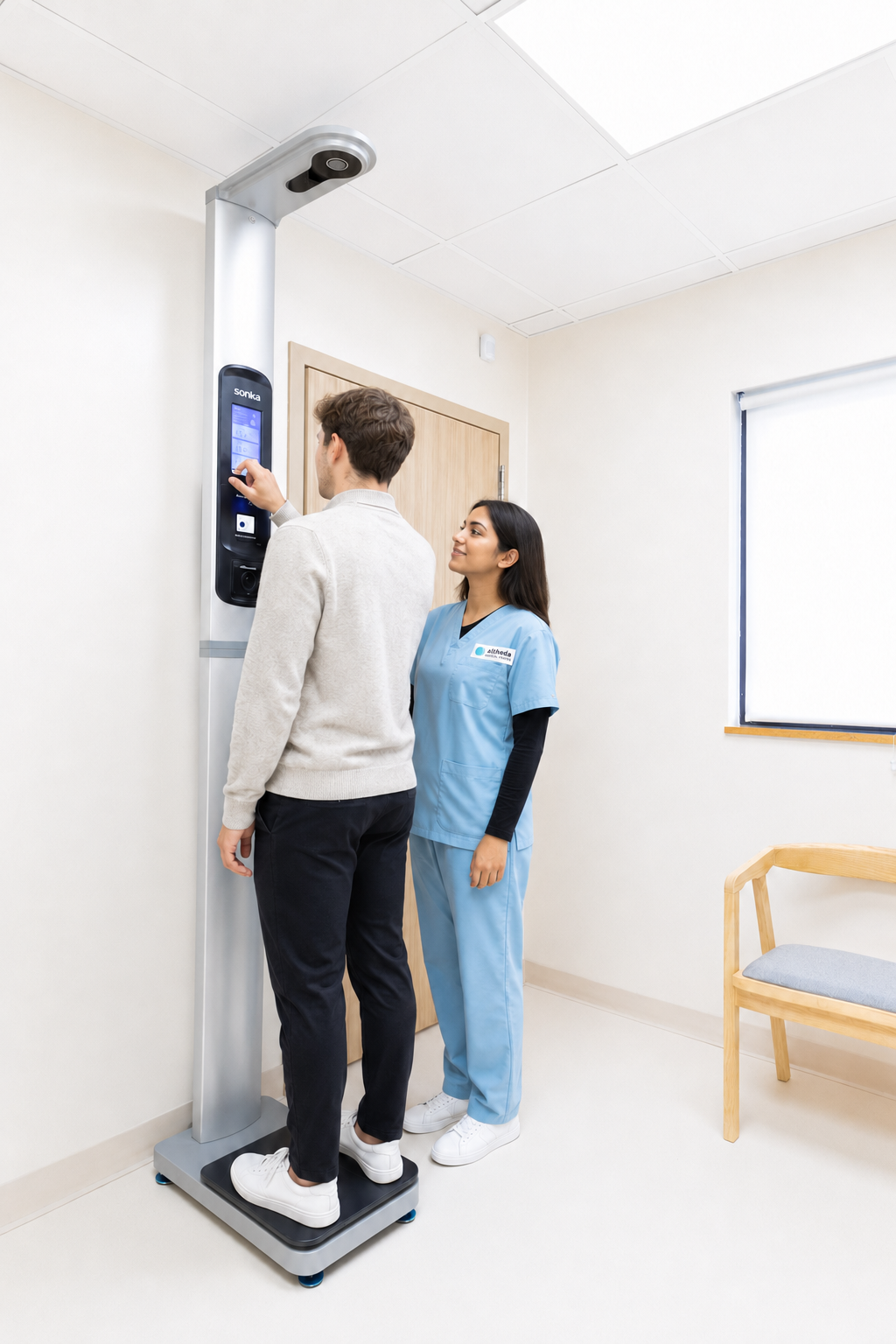












Metabolic Health in Pittsburgh
Metabolic health affects your energy, weight, blood sugar, long-term health risks, and day-to-day wellbeing. Altheda offers primary care visits for diabetes, prediabetes, insulin resistance, medical weight management, and related concerns with clear next steps and ongoing support.
Get seen right away!
for select visits
Lab-based guidance
Understand A1C, glucose, insulin resistance, and metabolic risk factors.
Connected care
Support for diabetes, prediabetes, weight concerns, and related health goals.
Local & trusted
Primary care support for patients across Greater Pittsburgh.
Metabolic Health Primary Care Services
Choose the concern that best matches your needs. Each page explains when to schedule, what may be included, and what to expect.
Diabetes Management
Support for type 2 diabetes, blood sugar monitoring, medication review, labs, and ongoing primary care.
Learn About Diabetes Care →
Prediabetes Management
Guidance for elevated A1C, borderline blood sugar, family history, lifestyle planning, and follow-up.
Explore Prediabetes Care →
Medical Weight Management
Primary care support for weight-related health goals, metabolic risk, medication review, and follow-up.
Learn About Weight Management →
Insulin Resistance Visit
Evaluation for insulin resistance concerns, weight changes, fatigue, cravings, abnormal labs, or PCOS-related risk.
Schedule an Insulin Resistance Visit →When to Schedule a Metabolic Health Visit
Schedule a visit for diabetes, prediabetes, weight-related concerns, abnormal blood sugar, insulin resistance, or symptoms tied to metabolism.
Your provider can review labs, medications, symptoms, lifestyle factors, and goals, then recommend next steps.
Who Should Consider Metabolic Health Primary Care?
A metabolic health visit may be helpful if you are managing an existing condition or trying to understand new lab results, symptoms, or health changes.
- Diabetes
- Prediabetes
- Elevated A1C
- High glucose
- Insulin concerns
- Weight changes
- Appetite changes
- Metabolic risk
- Fatigue
- Cravings
- PCOS concerns
- Family history
Known Diabetes or Prediabetes
For patients who need help reviewing labs, medications, blood sugar trends, or follow-up care.
Abnormal Blood Sugar Labs
For elevated A1C, fasting glucose, insulin concerns, or results that need explanation.
Weight-Related Health Concerns
For patients seeking medical support with weight, appetite, metabolic risk factors, or related conditions.
Possible Insulin Resistance
For symptoms or risk factors such as weight changes, cravings, fatigue, PCOS-related concerns, or family history.
What to Expect During Your Visit
-
1
Health History & Symptom Review
Your provider reviews your health history, symptoms, medications, weight changes, lifestyle factors, family history, and previous lab results.
-
2
Lab Review or Testing Plan
Your provider may review A1C, glucose, cholesterol, kidney function, liver markers, thyroid labs, or other results, and may recommend additional testing if needed.
-
3
Personalized Care Plan
You leave with clear next steps, which may include medication guidance, lifestyle recommendations, monitoring, follow-up visits, or referral to a specialist when appropriate.
Why Choose Altheda for Metabolic Health Primary Care?
- Whole-Person Metabolic Review Review blood sugar, weight, cholesterol, blood pressure, medications, lifestyle, and family history together.
- Clear Lab Guidance Your provider can help interpret A1C, glucose, cholesterol, triglycerides, thyroid labs, and other results.
- Primary Care for Related Conditions Metabolic health can overlap with prediabetes, diabetes, thyroid concerns, heart risk, sleep, and mental health.
- Practical Prevention Planning Build a realistic plan for follow-up labs, lifestyle changes, medication discussion, referrals, or monitoring. Schedule Metabolic Visit
What do patients say about Altheda?
Metabolic Health FAQs
Router-style answers to help patients choose between thyroid management, fatigue evaluation, PCOS and hormone health, and men’s hormone or testosterone evaluation without repeating each individual service page.
Metabolic Health Router Basics
5 questions - page purpose, primary care scope, symptom overlap, and visit limits.
What is the Metabolic Health page for?
This page helps patients choose the right starting point for concerns that may involve energy, weight changes, thyroid function, blood sugar risk, PCOS symptoms, hormone changes, or testosterone-related questions.
Is this a treatment page or a router page?
This is a router page. It helps guide patients toward the most relevant service page, such as thyroid management, fatigue evaluation, PCOS and hormone health, or men’s hormone and testosterone evaluation.
What does metabolic health mean in primary care?
In primary care, metabolic health usually means looking at how symptoms, labs, weight trends, blood sugar risk, cholesterol, thyroid function, medications, sleep, and hormone-related factors may fit together.
Can metabolic symptoms have more than one cause?
Yes. Fatigue, weight changes, mood changes, hair changes, cycle changes, and libido changes can overlap across thyroid, blood sugar, sleep, medication, nutrition, stress, PCOS, testosterone, and other health factors.
Can one appointment cover every metabolic health concern?
One appointment may not cover every requested concern. What can be addressed depends on your symptoms, health history, lab needs, safety concerns, clinical priorities, and available appointment time. Additional testing, follow-up, or referral may be recommended.
Choosing the Right Starting Point
6 questions - thyroid, fatigue, PCOS, men’s hormones, unclear symptoms, and abnormal labs.
When should I start with thyroid management?
Start with thyroid management if your main concern is abnormal thyroid labs, known hypothyroidism or hyperthyroidism, thyroid medication questions, thyroid follow-up, or symptoms you believe may be connected to thyroid function.
When should I start with fatigue evaluation?
Start with fatigue evaluation if your main concern is low energy, tiredness, weakness, brain fog, sleep disruption, exercise intolerance, or fatigue that has not improved with rest or basic lifestyle changes.
When should I start with PCOS and hormone health?
Start with PCOS and hormone health if your main concern is irregular periods, missed periods, acne, excess hair growth, weight changes, insulin resistance concerns, ovarian cyst history, or prior labs suggesting possible PCOS.
When should I start with men’s hormone and testosterone evaluation?
Start with men’s hormone and testosterone evaluation if your main concern is low testosterone, low libido, erectile changes, fatigue, strength changes, mood changes, fertility questions, or testosterone lab review.
What if my symptoms fit more than one page?
Choose the page that matches your main or most disruptive concern. Metabolic symptoms often overlap, so your provider can help decide whether additional testing, follow-up, or another visit is needed.
What if I only have abnormal labs but no major symptoms?
A visit can still be useful. Your provider can review what was tested, why it was ordered, when it was drawn, whether the result should be repeated, and whether it fits your health history.
Symptoms, Labs & Risk Review
6 questions - lab interpretation, hormone panels, thyroid labs, blood sugar markers, and outside results.
Will I automatically get a full metabolic or hormone panel?
Not necessarily. Testing should be guided by symptoms, history, age, medications, menstrual status when relevant, prior results, safety factors, and clinical need. Broad panels are not always useful for every patient.
Can I start with a visit before getting labs?
Yes. Starting with a visit often helps the provider decide which labs are appropriate instead of ordering broad testing without context.
What labs may be discussed for metabolic health?
Depending on your concern, your provider may discuss thyroid testing, A1C or glucose testing, cholesterol and triglycerides, kidney and liver function, blood count, iron or vitamin testing, testosterone testing, or reproductive hormone testing when clinically appropriate.
Can Altheda review outside lab results?
Yes. You can bring or upload outside lab results. Your provider can review what was tested, when the labs were drawn, whether the results fit your symptoms, and whether repeat or additional testing may be appropriate.
Why does timing matter for some labs?
Some labs can be affected by time of day, fasting status, menstrual cycle timing, medication use, supplement use, recent illness, or recent lifestyle changes. Your provider can explain whether timing matters for your specific results.
Can normal labs still leave symptoms unexplained?
Yes. Normal labs can be reassuring, but they do not always explain symptoms. If symptoms continue, your provider may review sleep, stress, nutrition, medications, mental health, chronic conditions, or whether another evaluation is needed.
Primary Care Role & Treatment Planning
6 questions - treatment decisions, medication review, monitoring, lifestyle, and referrals.
Can Altheda treat metabolic health concerns?
Treatment depends on the concern, evaluation, lab results, safety factors, and clinical appropriateness. Your provider can discuss treatment options, medication review, lifestyle factors, monitoring needs, and referral when needed.
Can Altheda prescribe thyroid medication?
If thyroid medication is clinically appropriate, your provider can discuss treatment or monitoring. Medication decisions depend on lab results, symptoms, history, pregnancy status when relevant, prior treatment, and safety considerations.
Can Altheda prescribe testosterone therapy?
Testosterone therapy is not automatic. A responsible evaluation usually includes symptoms, properly timed lab testing, repeat confirmation when appropriate, fertility discussion, safety review, and monitoring planning before treatment decisions are made.
Can lifestyle changes be part of a metabolic health plan?
Yes. Depending on your concerns, your provider may discuss nutrition, activity, sleep, stress, weight trends, medication review, blood sugar risk, and follow-up goals as part of a practical care plan.
When would I need a specialist referral?
Referral may be recommended for complex thyroid disease, difficult-to-control diabetes, adrenal or pituitary concerns, complex reproductive hormone concerns, fertility concerns, unclear lab abnormalities, severe symptoms, or cases needing specialist testing or long-term endocrine management.
Can Altheda coordinate care with other providers?
Yes. Altheda can review outside records, discuss referrals, coordinate follow-up, and help patients understand next steps when care involves endocrinology, gynecology, urology, behavioral health, nutrition, or other specialists.
Remote vs In-Person Care & Visit Scope
5 questions - telehealth fit, in-person checks, visit preparation, follow-up, and unrelated concerns.
Can a metabolic health visit be done remotely?
Some visits may start remotely when clinically appropriate, especially for symptom review, medication review, outside lab review, and follow-up planning. In-person care may be recommended if an exam, vital signs, or testing is needed.
When is an in-person visit better?
An in-person visit may be better when vital signs, weight, blood pressure, a physical exam, thyroid exam, skin or hair exam, lab collection planning, or a more detailed assessment is needed.
What should I bring to a metabolic health visit?
Bring a list of symptoms, medications, supplements, prior lab results, menstrual cycle details when relevant, weight or blood sugar trends if available, thyroid or hormone medication history, and any questions you want to prioritize.
How often will I need follow-up?
Follow-up depends on the concern. Some patients need lab review and a plan, while others may need repeat testing, medication monitoring, lifestyle follow-up, referral, or ongoing primary care management.
Can the visit include unrelated concerns too?
The visit should focus on the metabolic, hormone, or symptom concern that matters most. Other concerns may need a separate visit depending on complexity, testing needs, safety concerns, and available appointment time.
Safety, Scheduling & Pittsburgh-Area Care
5 questions - prompt symptoms, ongoing concerns, new patients, scheduling, and local access.
What symptoms need prompt medical attention?
Seek prompt care for chest pain, fainting, severe weakness, confusion, severe dehydration, sudden severe headache, severe abdominal pain, thoughts of self-harm, very high or very low blood sugar symptoms, or symptoms that are rapidly worsening.
What if my symptoms are ongoing but not urgent?
Schedule a visit to review the pattern, timeline, triggers, prior testing, medication history, and possible next steps. Ongoing metabolic symptoms often need a step-by-step evaluation rather than a single lab or single diagnosis.
Can new patients schedule for metabolic health concerns?
Yes. New patients may schedule a visit to review metabolic symptoms, prior lab results, medication questions, testing needs, and follow-up planning.
How do I schedule a metabolic health visit?
Patients can schedule online or contact Altheda for current availability. New patients may schedule as a new patient, and returning patients may schedule as a follow-up or established patient when available.
Where can I get metabolic health primary care near Pittsburgh?
Altheda provides primary care visits for metabolic, endocrine, and hormone-related concerns for patients in Pittsburgh and nearby communities, including Kennedy Township, McKees Rocks, Robinson, Moon, Coraopolis, Crafton, Carnegie, and surrounding areas.
Schedule Your Metabolic Health Visit Today
Stay ahead of your health with comprehensive testings from experienced clinicians at Altheda